Gyere hozzánk podcastet készíteni!

Bérelhető a Mandiner korszerű stúdiója, mutatjuk a részleteket!


Tájékoztatjuk olvasóinkat, hogy a Mandiner tartalomszolgáltatása megszűnt, azon kizárólag korábban közzétett archív tartalmak érhetők el.

Throughout the report, language is used that is subjective, full of political clichés, and has no direct relevance to democracy and freedom.

“Dear David,
As discussed, I am attaching an open letter to you providing my comments on the 2012 Nations in Transit Report on Hungary. I am also attaching the Report itself highlighting in it the sentences that I am quoting from the Report so that you can identify them more easily.


Dear Mr. Kramer,
As discussed at our meeting of last June, I would like to take the opportunity to comment on some of the observations made in the 2012 Nations in Transit Report on Hungary published by Freedom House.
Let me emphasize right away that I regard Freedom House as a very respectable institution which through its work and reporting has contributed significantly to the cause of freedom around the world, including in Hungary. Freedom House is a point of reference for journalists, politicians, opinion makers in and outside of the United States. I especially appreciate and respect your tireless work in promoting human rights. It is therefore a major concern if Freedom House’s reporting on Hungary falls below the professional standards expected from such an impactful institution with which you are associated. So it is in this spirit that I ask you to consider the following corrections and comments.
To be frank, the 2012 Nations in Transit country report on Hungary exhibits an unusually biased assessment of the situation in Hungary, full of vague, unsubstantiated and subjective judgments, as well as factually wrong statements. Let me elaborate.
1. The Constitutional Process
The report formulates a series of criticisms about the new Fundamental Law (Constitution). Before I go into the details, let me remind you of the historic background of the constitutional process just before the fall of communism.
As you know, Hungary was the first Communist country which started to prepare for free elections and a democratic transformation while still under Soviet rule. The process began with the establishment of roundtable talks where the Communist party in power and the newly formed opposition parties entered into negotiations about the amendment of the constitution. Not surprisingly, the two sides were distrustful of each other and many compromises had to be reached in order to go forward. The technique chosen was to make amendments to the constitution which existed under the Communist regime. The Parliament which adopted the constitutional amendments in 1989 was a Communist Parliament, which was not elected democratically. Let me add in parenthesis that no one made a big fuss about this at the time. I am not suggesting that they should have, since it was a big step forward under those circumstances. It is just a reminder to those who do not know the history, but are quick to jump to conclusions when it comes to criticizing the new Constitution’s adoption process.
The political actors involved in the roundtable talks did not consider the constitutional changes as final and, as the amended Constitution’s preamble noted, its role was to “facilitate a peaceful political transition…until the country’s new Constitution is adopted”. This constitutional “legitimacy deficit” was acknowledged by political scientists, constitutional scholars and all actors involved in the process as well. Until the current government took power in 2010, a new constitution could not be adopted for the simple reason that the two-thirds majority needed to change the Constitution had been lacking. Hence to suggest, as the Report does in many explicit and implicit ways, that for a democratically elected government disposing of the supermajority to undertake the daunting task of remedying a constitutional deficit that has been on the political agenda for 22 years is no more than a political maneuver to solidify its own power shows a lack of basic understanding of Hungary’s constitutional heritage and a complete ignorance of historical facts.
Let us then go into some of the details.
1. The Fundamental Law
a. The Report says: “In 2011, a new constitution was passed by the governing Fidesz-KDNP coalition without any meaningful consultation.”
The parliamentary majority made a serious effort to engage stakeholders. The drafting committee reached out to all of the major public office holders, national associations of the national and ethnic minorities, national interest groups of the local governments, the Institute of Legal Studies of the Hungarian Academy of Sciences, and also to the departments of constitutional law of all state universities, as well as the churches and foundations, in order to ask for their legal opinions and expert advice. Many of these organizations submitted proposals which were considered and debated by the committee and were made available on the Parliament’s website. The parliamentary groups of every party in Parliament, as well as every independent MP, were requested to submit a proposed draft constitution, but such drafts were only received from the governing parties – Fidesz and KDNP – and one independent Member of Parliament, Ms. Katalin Szili (the former Socialist Speaker of the Parliament). In addition to these efforts, the National Consultation Committee sent out a questionnaire which close to one million people returned and their responses were taken into account when the Parliament took its final vote on the draft.
It was a political decision made by the opposition parties not to be involved in any meaningful way in the expert work that was required during the drafting process as a means of trying to undermine and discredit the governing parties and the political legitimacy of the new constitution.
b. The Report says: “The increased range of laws that will require a supermajority to pass in this new constitutional framework will likely damage the effectiveness of future governments.”
In fact, the Fundamental Law contains approximately the same amount of supermajority laws (so-called “cardinal laws” that require a two-thirds majority in Parliament to amend) as the previous Constitution. The raison d’être of the cardinal laws was that the participants of the roundtable talks who worked out Hungary’s new constitutional order were uncertain of the results of the first democratic elections and, being distrustful of each other, wanted to secure the political compromises reached in 1989.
c. The Report says: “A new law on the Constitutional Court further limits citizens’ access to the body”. Further: “As part of the broader drive to eliminate checks and balances in the country’s constitutional framework, in 2010 the government had amended the old constitution to strip the Constitutional Court of its jurisdiction over important matters that were already closed to public input via referendums.”
“Limiting citizen’s access” is a reference to the abolishment of actio popularis. The idea of giving the widest possible access to the Constitutional Court through the institution of actio popularis was a way of securing the newly created democratic system after the regime change. However, as many constitutional scholars have pointed out, this institution represents a major burden on a constitutional court. Exactly for this reason, actio popularis is very rarely featured in constitutions. This is why the President of the Hungarian Constitutional Court, in an official letter, urged the drafting committee to abolish it. Having tested the pros and cons of actio popularis for over 20 years, the Court’s reasoned view can hardly be dismissed as a political move or labeled as the erosion of the constitutional framework. However, while abolishing this institution, the Fundamental Law expands the authority of the Court by empowering it to review any other court ruling for conformity with the Fundamental Law on the basis of an individual constitutional complaint. This is a major step toward strengthening the powers of the Court. The Report ignores all this and makes a summary and biased judgment.
d. The Report says: “…cases regarding the right to private property are also outside the court’s purview.”
This is an inaccurate reference to the provision of the Fundamental Law (Article 37) which contains a limitation on its power to “review Acts on the State Budget and its implementation, the central tax type, duties, pension and healthcare contributions, customs and the central conditions for local taxes”. However, the Court actually retained the authority of reviewing these laws “for conformity with the Fundamental Law or annul the preceding Acts due to violation of the right to life and human dignity, the right to the protection of personal data, freedom of thought, conscience and religion, and with the rights related to Hungarian citizenship.” This is a power which the current Constitutional Court has already used when it annulled a tax law (on retroactive taxes on severance payments) passed by the Parliament in 2011 (see Decision 37/2011). Furthermore, this restriction only applies “as long as the state debt exceeds half of Gross Domestic Product.”
The Fundamental Law explicitly states that “Every person shall have the right to property and inheritance” (Article XIII). As I pointed out above, the Court retains the authority to review the conformity of all laws with the Fundamental Law, so the Report’s claim that private property is generally exempted from the Court’s purview is seriously misleading and factually incorrect.
e. The Report says: “The preamble’s heavy reliance on Christian language—in a country where religious attendance is around 13 percent—is particularly controversial….”
What the report calls “Christian language” is the Preamble’s quote from the first paragraph of the Hungarian National Anthem (“God bless the Hungarians”), a symbol of national unity for more than 150 years, sung by Hungarians at every major public and private ceremony. The Preamble also explicitly acknowledges the important part Christianity has played in Hungarian history. It is a historical fact that Hungary’s birth as a European nation is intimately linked with Hungary’s King Saint Stephen’s unifying the nation under the umbrella of Christianity. To quote the Fundamental Law: “We recognize the role of Christianity in preserving nationhood. We value the various religious traditions of our country.” Is that heavy reliance on Christian language? And how does this threaten democracy which is the underlying theme of the report? Surely, the inscription “in God we trust” on the dollar bill, or on the U.S. Capitol’s House Chamber is not a threat to democracy.
The Report’s mention of the low level of active church attendance as a reason to criticize the Fundamental Law’s reference to Christianity is unprofessional at best, and insulting at worst. The low level of active church attendance is one of the most visible vestiges of the Communist era during which active church attendance was regarded with suspicion – to say the least, and church-run schools were closed, but it does not mean that the Christian affiliation of Hungarians ceased to exist. In fact, the vast majority of Hungarians regard themselves Christians, according to the latest census. The “controversy” that the Report cites in connection with the “Christian language” is articulated only by a very small group of left-liberal thinkers, but is not the reality for most of Hungarians.
Frankly, this criticism of the Report is a very cheap shot from an institution like the Freedom House created by a country like the United States where the words “God bless America” is on every American’s lips no matter what his or her religious affiliation or beliefs are.
2. Religion Law
The Report says: “A new law on religions …..grants formal recognition to only 14 religious groups, down from the previously recognized 352. Further: “Beginning in 2012, all other religious groups will lose the financial privileges associated with recognition and will instead function as associations.” Further: “The fact that they will lose their financial privileges and be excluded from the 1 percent income tax scheme will substantially decrease their revenues. The change in designation will also affect their ability to own land and participate in the provision of public services.”
Again, a little background is needed here. Many of the 350 or so churches registered under the previous law had existed as churches in name only and were in reality for-profit organizations established to take advantage of tax benefits given to churches. The Government decided to tackle this abuse of privilege head-on to provide more transparency of taxpayer money spent on supporting religious activities in conformity with democratic norms.
To be clear, the Fundamental Law guarantees the freedom of religion: “Every person shall have the right to freedom of thought, conscience and religion” (Article VII). Recognition by Parliament as a church is by no means a precondition of the free exercise of religion in Hungary. Rather, the principle of recognition is based on the notion that if taxpayer money is spent on supporting a church for its religious and social services, then those on the receiving end should stand the test of public scrutiny and prove that they are not profit-seeking entities. In December 2011, Parliament registered 14 churches based on their historical presence and social significance. In February 2012, another 18 churches were registered. The Government has made it very clear that the list of registered churches is open and expandable.
A religious community not officially recognized as a church can apply for recognition as a religious association and thus remains eligible for receiving 1 percent of an individual taxpayer’s income tax under the laws regulating civil society organizations. It may continue to own land and can call itself a “church” even in the absence of official recognition as a church. A change in its status also does not restrict its ability to provide public services, such as maintaining schools, social institutions or hospitals. And if it provides such public services it could apply for state subsidy.
Unfortunately, none of this is mentioned in the Report.
3. Media Law
Let me first say that the media law was submitted to the European Commission for comment and several of its recommendations were subsequently adopted. The Report itself acknowledges that “the Hungarian media market can be considered vibrant”, that “slowly, but steadily, investigative journalism has also been developing” and takes note of the “flourishing scene of high-quality political blogs”. It notes – incorrectly – that government appointees now have “considerable power to limit the freedom of expression” but it also acknowledges that the “new law has not yet been used to gag dissenting voices”.
Then why does the Report mark down Hungary in the category of independent media?
The report goes on to say that substantial penalties foreseen in the law and “vaguely worded provisions” have undermined freedom of expression by creating a “chilling effect” resulting in self-censorship. Does the Report have any tangible proof of that in light of the above statements praising the vibrancy of the media market? Isn’t that just another subjective statement? About 75% of the media is private, of which 80% is foreign-owned. Did the authors contact the foreign owners to check?
The law is actually quite specific on the technical infringements where a fine can be levied. However, many critics who have not taken the trouble to read the law associate the fines with the provision of the law that speaks about the requirement for balanced reporting. According to the media regulations, no monetary fines may be imposed for unbalanced news coverage. Furthermore, the obligation of balanced coverage does not apply to press products and on-demand media services, but only to news programs of linear - in other words, traditional television and radio - media services engaged in the provision of information services. This rule has existed in Hungarian law since 1996, just as it exists in the legal systems of many other European countries (for example, the United Kingdom, Germany, and France). Once the infringement of balanced reporting has been established, the Authority may only require the media service provider to publish the disapproving decision of the Authority, or to provide the petitioner (third party or the Authority) with an opportunity to publish its own position on the news report concerned.
The report further ventures in its subjective statements when it says that the layoffs of close to one thousand people of the overgrown State TV staff were made “randomly or on political grounds”. What does “randomly” and “on political grounds” mean in this context? Have the authors of the Report talked to the TV managers or they just assume that the managers are so ignorant that they do a downsizing of several hundred people in a random way? Can several hundred people, including technicians, administrative people, etc., be laid off on political grounds? Statements like this are just based on hearsay by the understandably disillusioned people who were laid off and seek a political argument for the loss of their job.
4. Electoral Law
The Reports says: A new law “granted the vote for the first time to ethnic Hungarians in neighboring countries who have accepted Hungary’s offer of citizenship.”
The statement is not true in the first place and, placed in the whole context of biased views without any further comment, it also suggests that there is something in it that threatens democracy. Ethnic Hungarians in neighboring countries and elsewhere have been able to obtain Hungarian citizenship and vote in Hungarian elections for many years if they had a permanent residence in Hungary. What has changed since 2011 is that they can now obtain citizenship on easier terms than before and can vote in the national elections without permanent residence in Hungary. The Venice Commission specifically welcomed the possibility of out of country voting, which is general practice in Europe.
The Report says: “Due to the gerrymandering and other problematic provisions in the new electoral law, Hungary’s electoral process rating worsens from 1.75 to 2.25”.
The Report criticizes the recent changes in voting districts. Because of the reduction in the size of the Parliament from 386 members to 199 (a number much more adequate for a small county like Hungary), electoral districts had to be redrawn. The Venice Commission specifically welcomed that the new districts have become more proportional as a result of the reforms. The Report only mentions the criticism voiced by the opposition that there was “blatant gerrymandering”, without any mention that the new system is much more equitable, since the divergence in the number of people living in different voting districts has been substantially reduced to within the range recommended by the Venice Commission (maximum 15%; previously the divergence reached as much as 200-250%). I guess I do not have to remind anyone that gerrymandering has been widely used in the US - and criticized by those who felt that they might be at the losing end - as recently as preceding the 2012 elections triggered by the 2010 census. Redrawing of voting districts is a politicized issue by nature everywhere in the world – including in the U.S. - and no-one expects the opposition parties to remain silent, but for Freedom House to take sides in this debate is political campaigning and not independent reporting.
In light of all the above, I consider it unfair and politically biased to worsen the rating of Hungary’s electoral process.
5. General remarks
Throughout the report, language is used that is subjective, full of political clichés, and has no direct relevance to democracy and freedom. For example, the Report labels the current Prime Minister’s use of the terms “revolution in the voting booths” and “true regime change” as “inflammatory”. I would argue that while some people – mostly whose party of choice lost at the voting booths in 2010 – might indeed find this rhetoric upsetting, but so did the vast majority of Hungarians who heard their former Prime Minister acknowledge that he lied to them “day and night.” But neither the former, nor the latter has any relevance to the government’s democratic credentials or the level of freedom in Hungary.
It is striking how many assumptions the Report makes to justify its judgment that there has been a “backsliding” of democracy. It writes that the new constitutional framework “will likely damage the effectiveness of future governments”; that it “opens up the possibility of backsliding”; that changes in the judiciary “cleared the way for more direct political manipulation of the courts”; that the “government may try to confiscate other savings”; that the new electoral law “appears designed to solidify the current Government’s grip on power for the foreseeable future”. All laws can be abused, but why assume that they will? I have often said to audiences that the 55 miles per hour speed limit can also be abused if the police chose to slap you with a big fine because you drove at 58 miles per hour. But the police never do.
The authors of the Report might heed the advice of US Supreme Court Judge Ruth Bader Ginsburg who wrote in her opinion in the recent landmark health care ruling that “When contemplated in its extreme, almost any power looks dangerous”.
The Report writes that “Orban tends to appoint weak figures to key positions, favoring loyalty and lack of serious political ambitions over professional expertise and ability.”
First, is there any head of government who appoints people whom he or she cannot trust? Second, a loyal person is not necessarily weak or incompetent. Third, how do you define weakness and competence – have the authors of the Report made any tests, do they know those people, do they know their political ambitions or their expertise? Have they participated in meetings where policy issues are debated? I have. And I can tell you, they are neither weak nor incompetent. One may not agree with the policies, but to claim in a Freedom House report that people in the government are weak and incompetent is bad political journalism belonging more to the blogosphere than to a Freedom House report. This is again a political cliché echoing the opinion of a small group of left-leaning thinkers and politicians who ever since the fall of communism have maintained that only the left has competent people to govern Hungary and the right is composed of a bunch of incompetent people who should not be allowed to govern.
As for the general theme of the “effective elimination of checks and balances”, I wonder whether Freedom House realizes that it was due to a series of decisions by the current Constitutional Court that the religion law, the media law, the law on retroactive taxes, and other key pieces of legislation had to be amended, and that since the new President of the Republic entered into office a few months ago, he used his veto power several times.
Finally, let me note that while the Report criticizes the independence of the media, the overwhelming majority of its citations refer to media sources that it regards intimidated by the Media Council. Unsurprisingly, it does not cite any of the right-leaning think tanks or research institutes which have also commented on the issues. More importantly, however, it makes one wonder whether the authors of the Report bothered at all to read the actual texts of the laws. Looking at my comments above, I have my doubts.
6. Conclusions
Dear Mr. Kramer, as the US knows best, there is no “end stage” in a democracy. The world changes around us to which we have to find the right answers every single day. The most important thing is that we do not lose sight of the values we cherish: freedom and democracy. Hungary has never lost sight of that. Since the collapse of communism, many things have changed and the compromises made and the laws worked out during the roundtable discussions in 1989 were ripe for change. The current Hungarian Government gained at the polls a mandate for meaningful change. It was its responsibility and duty to undertake this historic task. Granted, the Hungarian Government acted speedily to make the necessary changes, but Europe has been facing an unprecedented crisis since WWII and there was no time to waste. We know that despite the best of intentions, mistakes are made. This is why Hungary has made and will continue to make improvements in the laws adopted, often following the advice of institutions like the Venice Commission, the EU, etc.
Let me remind you that the Hungarian Government itself sent many of the cardinal laws passed to the Venice Commission for comments. As a result, the Hungarian Parliament has amended laws which have been the subject of international scrutiny. The new Law on the Central Bank has been amended, the Law regulating the Courts was also amended to reinforce the monitoring powers of the National Judicial Council over the President of the National Judicial Office in order to guarantee the independent and impartial operation of the Hungarian Court system while, at the same time, ensuring the right to speedy trial – an equally important civic right. The list of churches recognized was expanded by an additional 18 new churches. I hope that in your next report you will take due note of these changes.
Dear Mr. Kramer, I sincerely hope that you will take my comments as seriously as we have taken your Report. I look forward to an open and honest, facts-based dialogue with you in the future.
Sincerely yours,
György Szapáry
Ambassador of Hungary to the United States of America"
Bérelhető a Mandiner korszerű stúdiója, mutatjuk a részleteket!
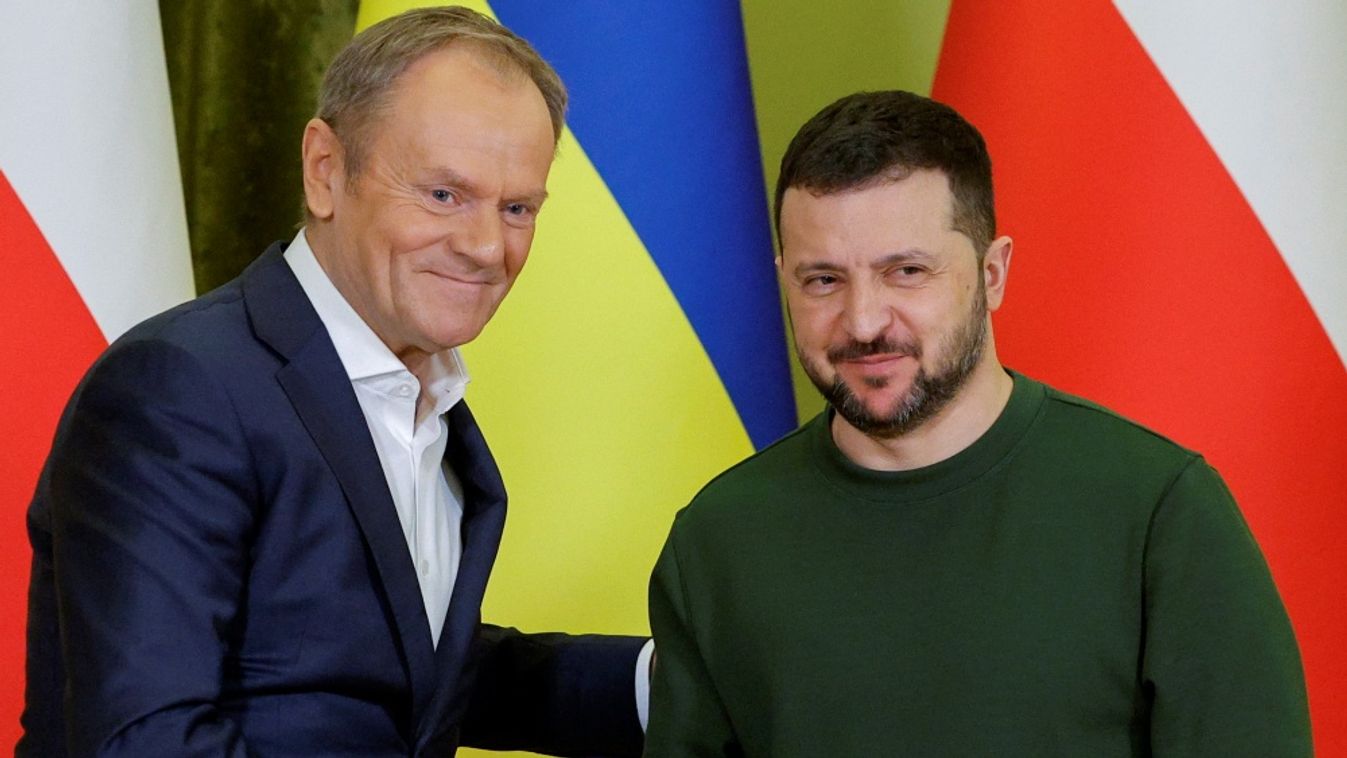
A Freedom House segítségével alapos elemzést hajtottak végre.
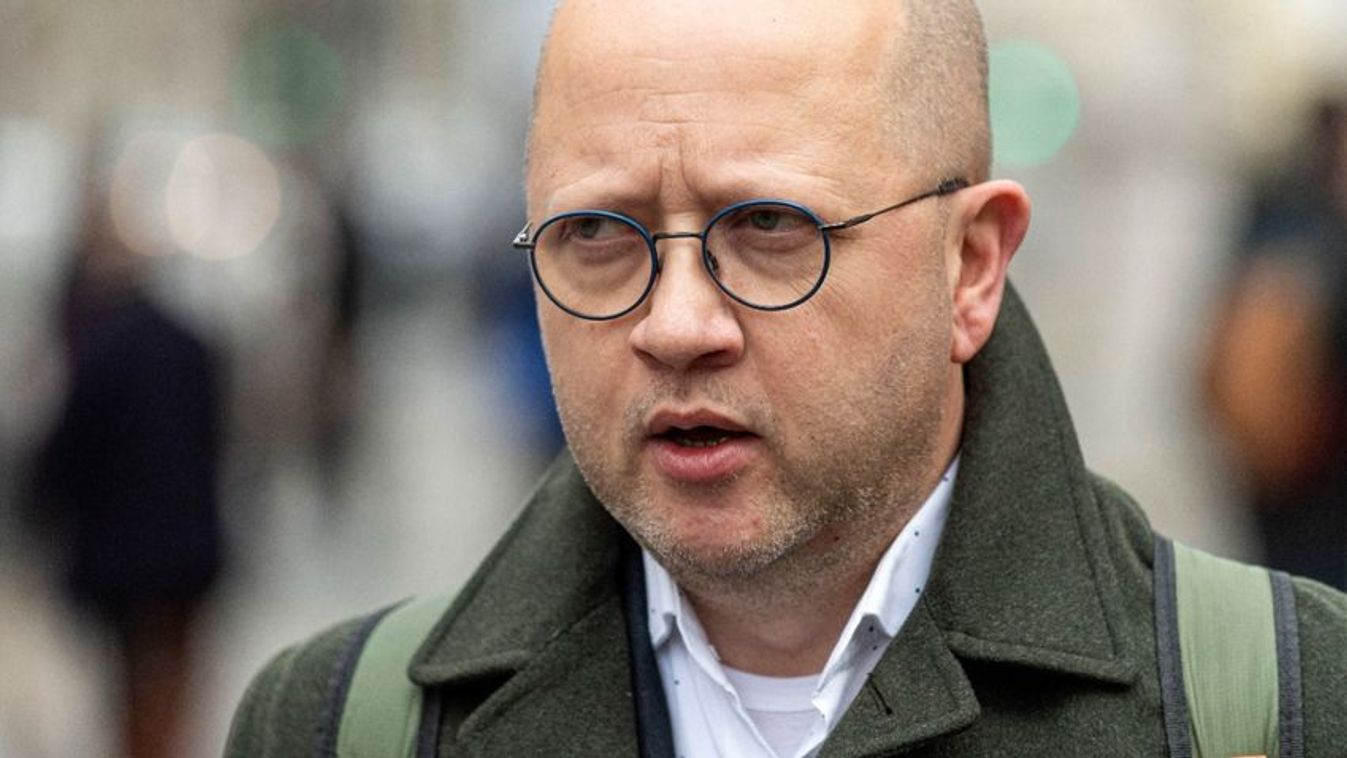
Kendernay János a magyar választók többségének szándékával is dacolva kiáll keleti szomszédunk uniós integrációja mellett.