
Gyere hozzánk podcastet készíteni!

Bérelhető a Mandiner korszerű stúdiója, mutatjuk a részleteket!


Tájékoztatjuk olvasóinkat, hogy a Mandiner tartalomszolgáltatása megszűnt, azon kizárólag korábban közzétett archív tartalmak érhetők el.

This is about decision makers' intent to take an oath on a common fate shared by all Hungarians: Jews and non-Jews alike.

An article by Mária Schmidt, Director-General of the House of Terror Museum in Budapest.
*


“The Holocaust represents a value, because it has led to immeasurable knowledge at the cost of immeasurable sufferings; thus, there is an immeasurable moral margin in it.”
Imre Kertész
I have not seen S. Z. for decades. The last time I met him was in New York in the early nineties at the place of the outstanding historian T. J., a common friend of ours, who has sadly deceased since. We got to know each other in Oxford where both of them were teaching then. S. taught Jewish history, of which subject he is one of the most widely acknowledged American academic experts, and I spent some time there on a research grant. Then S. came to Budapest for a conference, and after he gave his presentation, we went out for dinner. We talked for hours, and a lot of topics came up including the "House of Fates", about which he had already heard a lot back in Washington and of course also during his stay here. Those who volunteered to bring him up to date concerning the state of affairs in Hungary, about me and the would-be Holocaust museum, had spared no effort to dissuade him from meeting me, both via e-mail and then personally. They were probably unaware of our long time acquaintence which gave me the advantage that he wanted to ask me his questions and hear my answers, which is what he did. So we talked at length about the new memorial site which is in the making. I told him about the concept of the exhibitions and of the education and training center. I showed him the exterior and interior visual designs, the interior fit-out and furnishing concept. We discussed the prospective permanent exhibition in most detail. Finally he said: "If I get it right, this is a love story. A story of love between Hungarian Jews and non-Jews. A love that has survived everything. As a result of which there is still a large Hungarian Jewish community living in this country."
Yes. This is exactly what the "House of Fates – European Education Center" is all about. This is about decision makers' intent to take an oath on a common fate shared by all Hungarians: Jews and non-Jews alike. About the commitment to make sure that just like our predecessors we can also plan a shared future despite the cataclysms of the 20th century. This is why it is crucial for young generations to get to know and understand what the tragedy of the holocaust meant for our national community as well as what the causes, circumstances, intents and forces that had underlain and fuelled anti-Semitism in Hungary and in Europewere. Who and why had poisoned the lives of our fellow countrymen categorized as Jews even before the fateful Nazi occupation of Hungary. How and why part of the last, nearly intact European Jewish community could be so swiftly annihilated in Nazi death camps. Who are responsible for all that? Who were the ones who remained humans amidst inhumanity because they opted for what is good, at the risk of even their lives and freedom in some cases. How could the survivors start anew and process what can hardly be processed. Why the majority of those people decided to stay here, to start their lives at home again and share what their fellow countrymen had to share. For this is something unparalleled, something that is not self-evident at all, particularly if we consider the fact that in this Central and Eastern European region, and nearly in the whole of Europe, survivors decided to leave and part with their past.
The House of Fates is made up of three parts, namely an exhibition, an education and a training section. Moreover, it has an up-to-date, well-equipped conference room, a room for hosting and staging temporary exhibitions and the required infrastructural background.
The exhibition section is divided into three units: A permanent exhibition that takes 50-60 minutes to tour. The area of this exhibition is shielded so that visitors cannot use any electronic device there. The story that is related here focuses on the period between 1938 and 1948, based nearly exclusively on recollections of survivors, and is supposed to touch the feelings of the visitor, make him interested and, ideally, to prompt him to ask questions. The installation and the narrative are both targeted at the 14 to 24 year-old generation. Having toured this exhibition unit the visitor can proceed to see the "exploration" section or go on to look at the remaining "chamber" exhibitions. Upon entering the exploration section the visitor is (or may be) given a tablet, with the most important information concerning the items on display, including names, dates, and a lexicon, along with questions and assignments. Those interested in the chamber exhibitions may decide to see them or to come back and visit them at a later date. As our plans stand at present, the chamber exhibitions will show Hanna Szenes, the Zionist resistance, Raoul Wallenberg, Margit Slachta, Sára Salkaházi and the 1944 story of the Józsefváros Railroad Station as well as the story of the Jewish community of Budapest’s 8th district called Józsefváros. This is where the walls of perpetrators, those responsible and the humanitarian rescuers will be installed. A videostream will be played in the exploration room, showing visitors the most important events and personalities of those years. A number of computer workstations will also be installed where additional information and data can be collected and studied. Interactive workplaces will be created for browsing and searching for information.
At the training center there will be programs bringing as close as possible to members of the "Y generation" the very feeling and experience of being excluded, outcast and persecuted, while drawing their attention to the importance and inevitability of making a choice between good and evil and individual responsibility.
Importance is also attached to offering a training program to enable teachers to teach their students about the collective persecution to which entire social groups had been exposed under the dictatorships of the 20th century, with particular focus on the tragedy of the Holocaust.
It was seventy years ago, in 1944, that Hungary suffered one of the most horrendous tragedies in its modern-age history. The second Orbán cabinet took its decision on the creation of what is known as the "House of Fates" in the context of the memorial year relating to the 70th anniversary of the Holocaust. In remembering the national tragedy seven decades after, this memorial year is intended to be a site of “creating order in our common matters” and have “peace flow through our rembrance and regard”1. In the context of the memorial year, the government has allocated a HUF 1.5 billion budget to social programs and it adopted a decision building up the Memorial to the Child Victims of the Holocaust – European Education Center at the site of the former Józsefváros Railroad Station. I was entrusted with the role of leading the professional project team, while the implementation of the investment project was assigned to Government Commissioner Dr. Balázs Fürjes.
This assignment is a real honor for me but it is an immense responsibility and workload at the same time. It took me quite a while, wavering whether to undertake it at all. My children tried to dissuade me. As did some of my friends. One argument against taking up this job was that I would be exposed to relentless and fierce attacks. And even if all goes well, which I have staunchly believed up to this very day, I may expect nothing but denigration. Finally, I answered yes, out of love for my country. I hoped that through such an immense and successful undertaking I could perhaps make a contribution to reconciliation, to a discussion of the tragedies of the past to settle issues and to at least alleviating, if not bringing to an end, all of the evil and purposeless accusations constantly experienced even today. Thereby neutralizing or at least weakening the forces continuously calling Hungary an anti-Semitic and fascist country, using these unfounded stigmata as a political weapon to discredit the Hungarian nation as a whole. Indeed, I expected all of those who already started a media campaign against the House of Terror Museum and spared no effort to discredit it both in Hungary and abroad, to activate themselves again, and, alas, so they did, wasting no time. The same individuals and circles, with the same vehemence, started the same ruthless attack driven by the same motives both in Hungary and abroad, against me and the prospective memorial site, unleashing that orgy of hate which is so characteristic of them. This is why the "House of Fates" project became, right from the beginning, a target of a series of attacks lead, most unfortunately, by the Federation of Hungarian Jewish Faith Communities (MAZSIHISZ). For as we were approaching the 2014 election campaign the neolog Jewish religious organization undertook to launch a frontal attack against the government – yielding to circles of intellectuals dissatisfied by the weakness and wavering of the anti-government forces – threatening to boycott the memorial year. They put together a package of three demands, calling for the discontinuation of the sculpture composition designed for Szabadság Square in remembrance of Hungary's Nazi occupation, the removal of director-general Sándor Szakály from the helm of Veritas, a new historical research institute and a right to control and supervise the creation of the House of Fates.
Prime Minister Viktor Orbán tried to remove the politically motivated onslaught from among the campaign themes by inviting Jewish organizations to consultations after the elections. Nonetheless, MAZSIHISZ and its supporters continued their relentless campaign and their attacks on the House of Fates. They threatened and tried to blackmail everybody cooperating with us or even considering accepting our invitation. They bombarded the members of the International Advisory Board with e-mail messages, as well as anybody else whom they could contact. They spread their accusations all over the place both in Hungary and abroad. In collaboration with certain leaders of the U.S. Holocaust Memorial Museum in Washington – who have, to be honest, been rather negatively biased against us in the first place –, they turned Yad Vashem against us.
They are continuously inciting the Israeli Hungarian community as well. Among other charges, they argue that the name "House of Fates" is wrong or misleading, the location is not authentic, or if it is, then it is too particular; the deadline set by the government is too short for such complex work to be carried out properly, and then within one month of my appointment I was attacked for not having worked out a finished scenario. A public auto-da-fé was staged in the "Bálint House" where Professor András Gerő, arguing in favor of and working in the project team, was subjected to a ritual execution (also instead of me) by MAZSIHISZ employee László Karsai posing in the role of the grand inquisitor, in unison with the rather hot-tempered audience.
International pressure
This had seemed likely to come; indeed it was to be expected. I went and kept going through this before, during, and for years after, the opening of the House of Terror Museum. However, the like of the direct and intensive international pressure I have experienced in relation to this assignment I did not even have to face at the time of the creation of the House of Terror Museum. At that time it was only Mr. Mussatov, the then Ambassador of Russia, who protested against the new museum but his objections were settled through a joint tour of the exhibition and a discussion. The former diplomat has delivered presentations at several of our conferences since then. In regard to the "House of Fates", however, ambassadors of a number of western countries feel compelled to lecture me on how to interpret, indeed, how we all Hungarians should interpret our 20th century history, with a special focus on the role of Miklós Horthy. I have had to sit through countless lectures delivered by western diplomats about Horthy, Hungary's "revisionism", the collaboration of Hungarians etc., and all of them represented countries whose history offers at least as many, if not even more, very good opportunities to raise uncomfortable questions. I was asked as early as just before Christmas 2013 by US Deputy Chief of Mission Mr. André Goodfriend – of course on a strictly "friendly" basis – for a list of the names of those working on the House of Fates project. Then a fortnight later he told me – again, on a friendly basis – that he did not agree with the participation of some of those included in the list. "I wasn't aware that you needed to agree" was my response, also on a friendly basis. The Ambassador of the UK to Hungary assured me that Her Majesty's government was avidly interested in the Hungarian Holocaust. This is very nice of them, particularly in view of the fact that their predecessors weren't so very deeply concerned while the annihilation of European and particularly of Hungarian Jewry was underway. Both these gentlemen and a dozen or so of their fellow diplomats expressed their expectations and wishes in regard to the prospective exhibition. Hungary’s ambassadors in both Tel Aviv and Washington were summoned by the Departments of Foreign Affairs because of me, complaining about a remark I had made at a book presentation event, along the lines that the post-World War I system of dishonest peace treaties had been the most devastating tragedy of the 20th century and that a fair and unbiased approach should be taken when forming an opinion about Horthy's role in history just like in the case of Kádár’s role, rather than viewing these political leaders strictly in black and white. Foreign diplomats, particularly some of the responsible officers of the US voiced their definite expectation that it should only be appropriate and necessary for the Hungarian Government to invite an international committee of historians to commit Hungary's 20th century history to paper for us, Hungarians. They keep applying pressure to achieve such a governmental assignment. Even the US Foreign Secretary had been mobilized to achieve this end. I am particularly proud of the fact that during the latest Arab-Israeli armed conflict, Israel's Prime Minister Benjamin Netanjahu managed to find the time to send a letter to Viktor Orbán, voicing his concerns about my humble self and the House of Fates project.
As a consequence of internal political skirmishes and the unprecedented international pressure applied, both MAZSIHISZ and Yad Vashem withdrew from the International Advisory Board of the House of Fates project. The rest of the members were also brought under pressure, to make it impossible for that board to continue its work. Therefore, instead of the next scheduled meeting of the international advisory board, we could only hold a consultation where the members present (Michael Wolffsohn and Joshua Muravchik) liked and were satisfied with our concept.
The situation changed somewhat by the middle of this summer. Special Envoy for Holocaust Issues Douglas Davidson and Sir Andrew Burns of the International Holocaust Remembrance Alliance (IHRA) ascertained, each of his own, that the misgivings concerning and attacks against the project are utterly groundless, and therefore it would be rather difficult to explain why they withdraw their support from a memorial site that will be Europe's largest and very likely most grandiose and sophisticated such project.
Based on an initiative put forth by Director of International Jewish Affairs for the American Jewish Committee Rabbi Andrew Baker, a consultation took place in Budapest on July 28 among the House of Fates, the Páva Street Holocaust Memorial Center, MAZSIHISZ and IHRA, to remove obstacles from continued cooperation. The experts participating in the meeting raised no objection whatsoever against the contents of the exhibition and had no proposal or idea of relevance to be put on the table. After half a day of discussions the parties agreed that a working group to be formed of the representatives of international Holocaust experts would help us with our work in regard to both the exhibition and education. The agreement so reached was broken up by MAZSIHISZ within 24 hours, again without any sound reason at all, asserting that the text that was published in the form of a press release was not the same as the one that had been agreed on, despite the fact that the president of MAZSIHISZ had approved this text beforehand in an e-mail message. Within another 24 hours IHRA gave its support to this attitude.
The attitude of the foreign experts and officials is characterized by nothing better than what IHRA's English Chairman Sir Burns told me at the end of the meeting in July – suggesting, again, of course, on a strictly friendly basis that I should no longer write articles, thereby referring to my text entitled Captive of the Past concerning the Szabadság Square memorial which had appeared a few weeks earlier in the weekly Heti Válasz. He and Mr. David Cesarini justified this piece of advice by referring to my responsibility for the House of Fates project which I must not jeopardize by publishing essays of sorts. All of these developments only deepened my awe and admiration of the developed western world, on account of its deep and staunch commitment to the freedom of speech and thought, even if I am beginning to vaguely recognize how much there still is for us to learn here, on the outskirts of the developed world, before we can also fully enjoy this privilege. Until then, we should best refrain from writing articles or doing things such as thinking about our own history – rather, we should be grateful and accept that all of these missions will be undertaken by them instead of ourselves, for our benefit.
MAZSIHISZ
The party-state dictatorship set up a single tightly controlled organization to lead Hungarian Jews actively practicing their religion through which it could simultaneously control both the internal affairs and the international relations of the Hungarian Jewry. Only the most determined individuals remained members of Jewish organizations during the decades of the party-state rule, partly owing to the above mentioned strict supervision and partly because open expression and practicing of one's Jewish identity definitely did not meet the approval of the Communist authorities, in some cases entailing the devastating accusation of being a "Zionist", in most cases with gruesome consequences. Members failed to flock to religious communities in large numbers despite the "Jewish Renaissance" that followed the political régime change. Those communities are still made up primarily of a few hundred – mostly elderly pensioner – devotees. Consequently, the leaders of those religious communities – just like the organizations they are heading – enjoy no general acceptance in Hungarian society, as has been increasingly revealed by a long series of scandals that have broken up in recent times.
No matter how a variety of influential international Jewish organizations as well as Israel's representatives and diplomats have hastened to back them up, Hungarian society cannot be persuaded or forced to accept an official who first turned from transvestite performing artist into Lutheran theologian and Catholic parish choir master, and then on to the executive director of the Budapest Jewish Community, who is, according to the chairman of the Community, is not even of Jewish origin; or a former executive director banker who had been convicted for bribery. It is also clear for all interested outsiders that the current Chairman of MAZSIHISZ is not seeking an agreement in relation to the House of Fates but he is trying to improve his position to get re-elected by fully exploiting the media interest concerning the prospective memorial center. The Chairman of MAZSIHISZ is posing in the role of a relentless representative and promoter of the organization’s interests to prove his indispensability towards a handful of voters as well as international Jewish organizations and Israel. This is why he keeps upsetting all agreements and imposing new and then further demands and conditions. This is why he has formulated such demands in relation to the House of Fates that had never been and are still not considered to be of importance in relation to the Páva Street Holocaust Memorial Center, which is alleged to be very important to both him and the international Jewish organizations. During the past more than a decade the leaders of the Jewish religious community have never been able to contribute to creating the necessary environment and conditions for undisturbed and efficient work at the Páva Street institution, as is eloquently proven by the miserably low numbers of visitors and the unceasing internal skirmishes. And these unblessed circumstances were not in the least different during the eight-year period when they were cooperating with a Socialist-Free Democrat coalition government. As a matter of fact, MAZSIHISZ leaders are driven by their own self-interests when they keep provoking fruitless conflicts with the government, whatever action the government happens to take. In attacking the House of Fates, they will even find it worthwhile to obstruct worthy remembrance of the victims of the Holocaust and our murdered compatriots.
In the autumn of 2014, Mr János Lázár the minister in charge of the Prime Minister's Office who played a leading role in devising and organizing the memorial year for the 70th anniversary of the Holocaust; in putting in place the Szabadság Square memorial and the launching of the creation of the House of Fates, offered an adviser’s contract, much to the consternation of all, to Mr Gusztáv Zoltai, who had played a leading role in blocking all of the above programs, until his dismissal in early April 2014. According to the arguments then put forth by MAZSIHISZ Chairman András Heisler, Holocaust surviving Zoltai had been so severely affected by the government's intent to erect a memorial for the victims of Hungary's German occupation, that he resigned from all of his positions. Heisler himself opted for a different strategy, by turning for help as usual to international public opinion. Zoltai, who used to be a 1956 Communist militiaman, a member of the Hungarian Socialist Workers’ Party (MSZMP), a former member of the communist workers' militia, headed MAZSIHISZ as an executive director from 1991.
His demonstrative inclusion on the government side was explained by the minister by pointing out that he "did not regard advisory services as some monkey business" and that they had known each other for quite some time. Public consternation was only further aggravated by János Lázár's promise that the House of Fates would be opened "only in the framework of a consensual solution ", i.e. only if the domestic and international Jewish organizations, most recently, Hungarian Holocaust survivors and "those who suffered the tragedy", find it to be acceptable and agree with its "professionalism". Nothing could be more natural than Mr. Heisler's interpretation: the minister gave them the right of veto concerning the House of Fates project.
Accordingly, the Faith Community, a religious organization representing about two thousand individuals will exercise censorship over the contents of one of the government's important large scale projects, and will determine its view of history and its message. No such thing has happened in Hungary ever since the separation of state and church towards the end of the 19th century.
To let international Jewish organizations have a say without having contributed a single penny to the costs of setting up the institution is contrary to the responsibility of the sovereign Hungarian state for its own past, present and future.
In an interview with the daily Népszabadság (September 26, 2014) János Lázár repeatedly expressed that the moral values, the kind of community of shared values determining the political right, mean nothing to him. He finds criticism concerning his employment of Zoltay to be immaterial; indeed, he considers "any form of ex-post evaluation from the outside" of his newly hired advisor, to be a mistake. Let us not be surprised when using the same argument he invites one of these days the very Ferenc Gyurcsány to work for him as a government advisor, to whose Őszöd address Mr. Lázár referred the other day as a positive example.
Mr. Lázár apparently fails to understand that this time we are dealing with our very identity. This is not about practices in wielding power or safe bargains concluded in the background, but about principles, belief, all of the things on which our whole life, including our political community rests and is built. We have seen lots of examples during the past 25 years how disregarding principles and moral convictions lead to the loss of all values and then the collapse of entire political communities. When politics appear to be reduced to all-pervasive cynicism and bare immorality, the countdown will immediately start.
When I undertook to create what will be called the House of Fates, I knew what attacks I would be in for. I undertook the job nonetheless, because I am convinced that my country needs to make sure that young generations also learn that preserving solidarity towards each other is one of our most important common values, and giving it up leads to immense losses and tragedies in the past, and the same would be bound to happen in the future as well. I am convinced that processing the past of our nation as well as presenting and teaching the lessons drawn from it are our tasks and responsibilities which we do not want to and will not evade. This is a cause for our national community that cannot be influenced by any particular or external interests. Not even if Mr. Lázár holds other views on this. The happy ending of the Love Story is at stake.
We must not let it get botched up. I for one will definitely do my share to prevent that.
Bérelhető a Mandiner korszerű stúdiója, mutatjuk a részleteket!
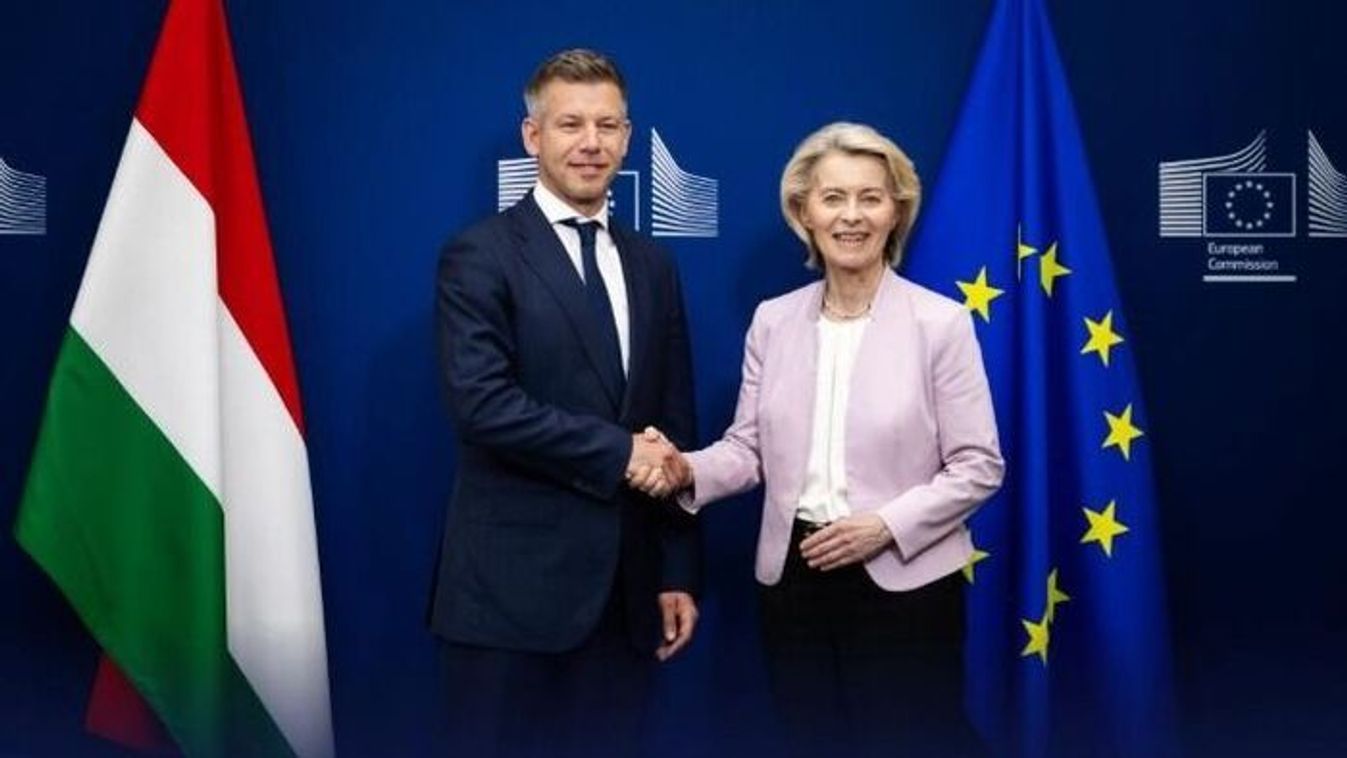
Gábor Holló also supported the Tisza Party by financing opinion polls, and he also provided news-reading traffic to Kontroll through his media outlets free of charge. Kontroll.hu is headed by the current Hungarian prime minister's brother.
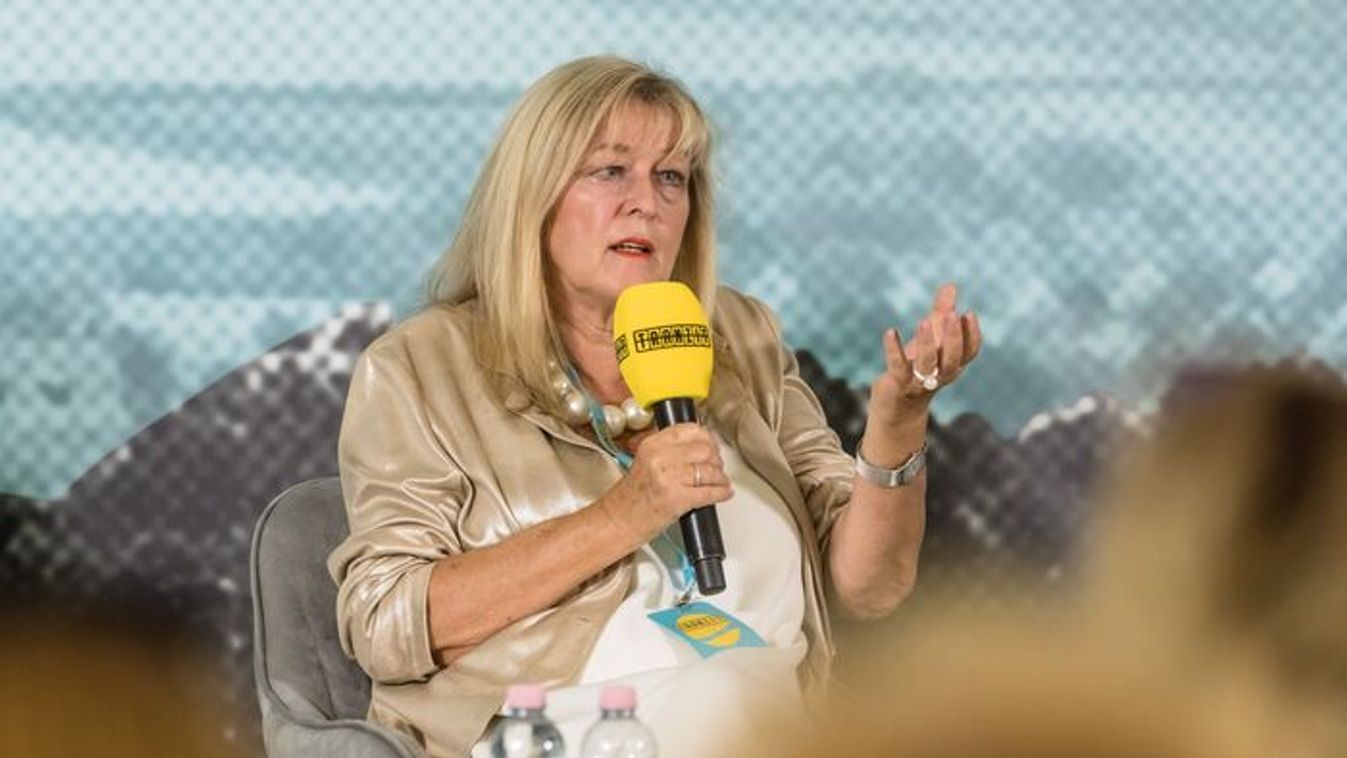
A nyugatiak száz évvel ezelőtt egyszer már az életünkre törtek.
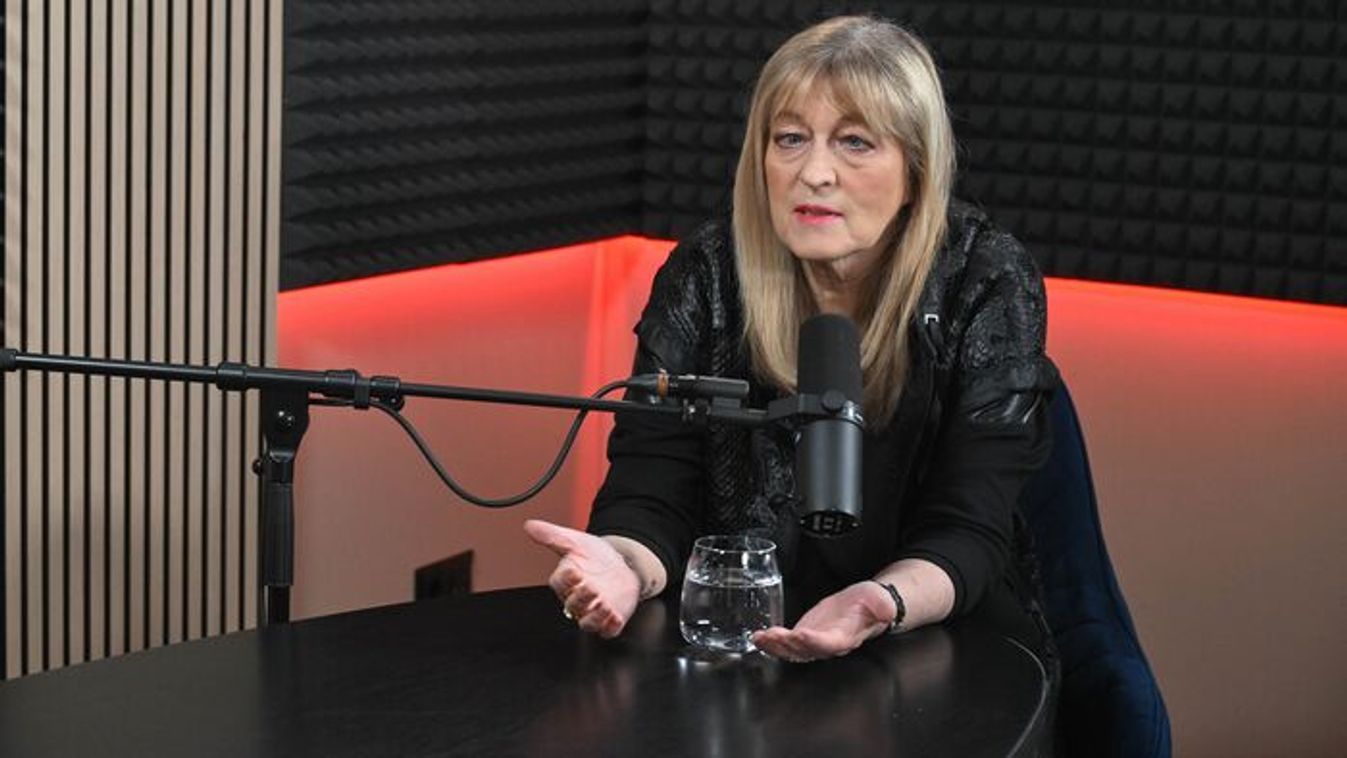
A történész szerint a vasárnapi választás nem csak Magyarországról szól.
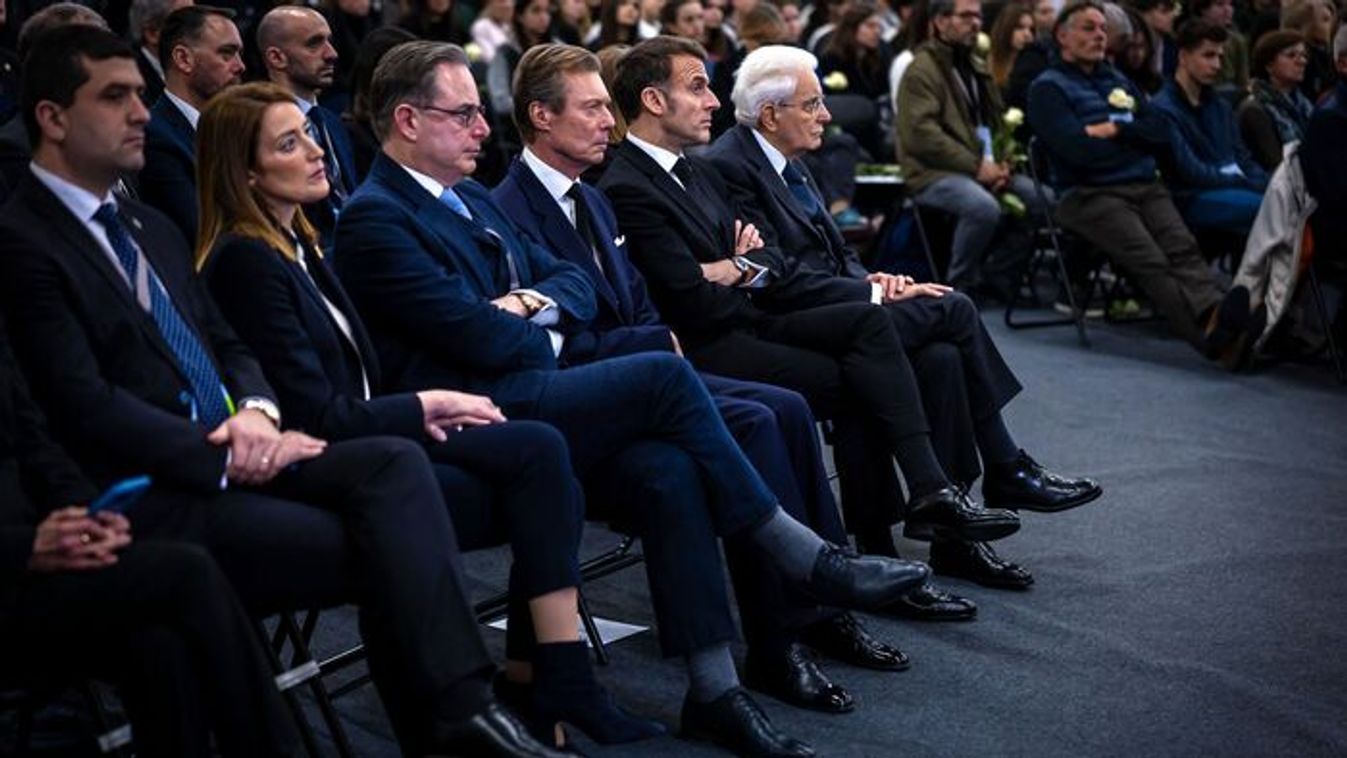
Vádolom az Európai Unió és az Európát vezető országok politikai elitjét, különös tekintettel miniszterelnökeiket és elnökeiket, vezető politikusaikat és meghatározó médiamunkásaikat.
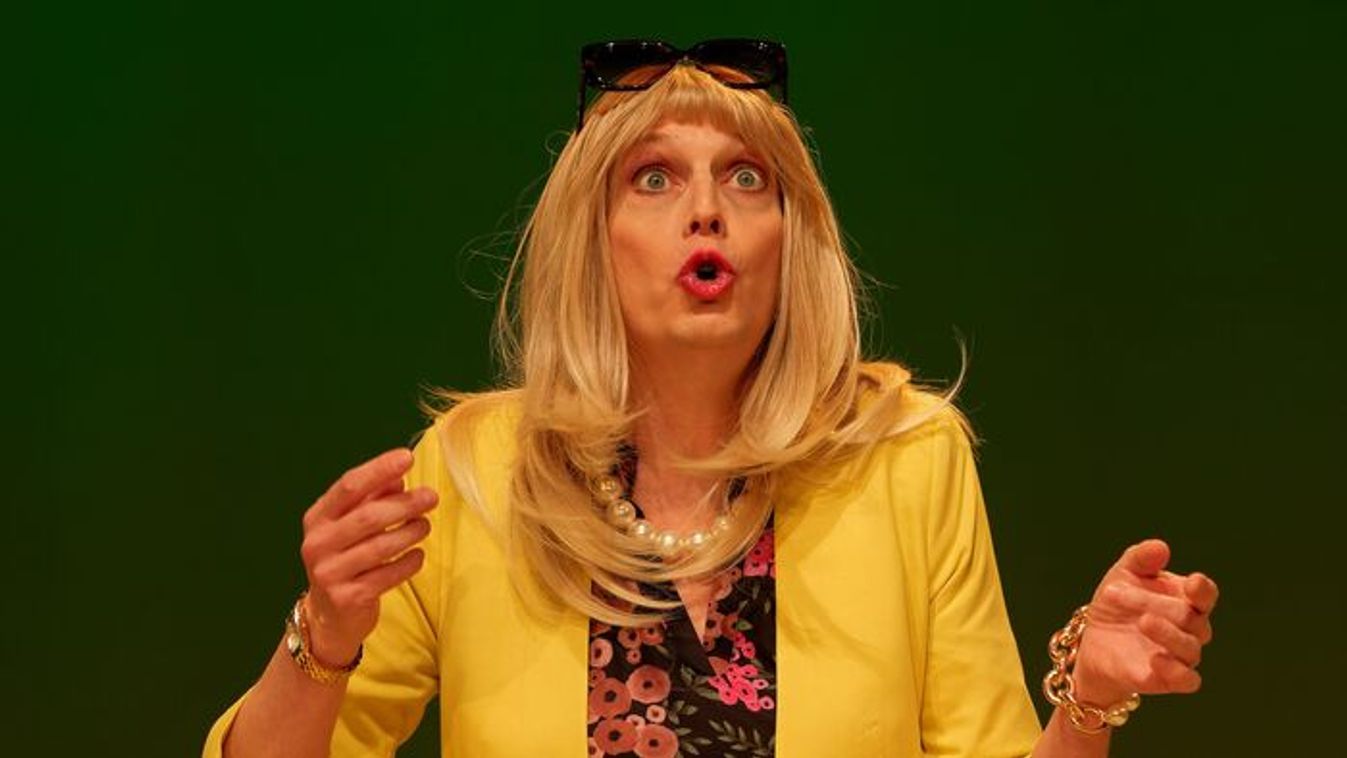
Pintér Béla nem a magyar társadalmat ismeri jól, csupán azt tudja üzembiztosan, hogy a saját közössége mire indul be. Vizvári Soma írása.
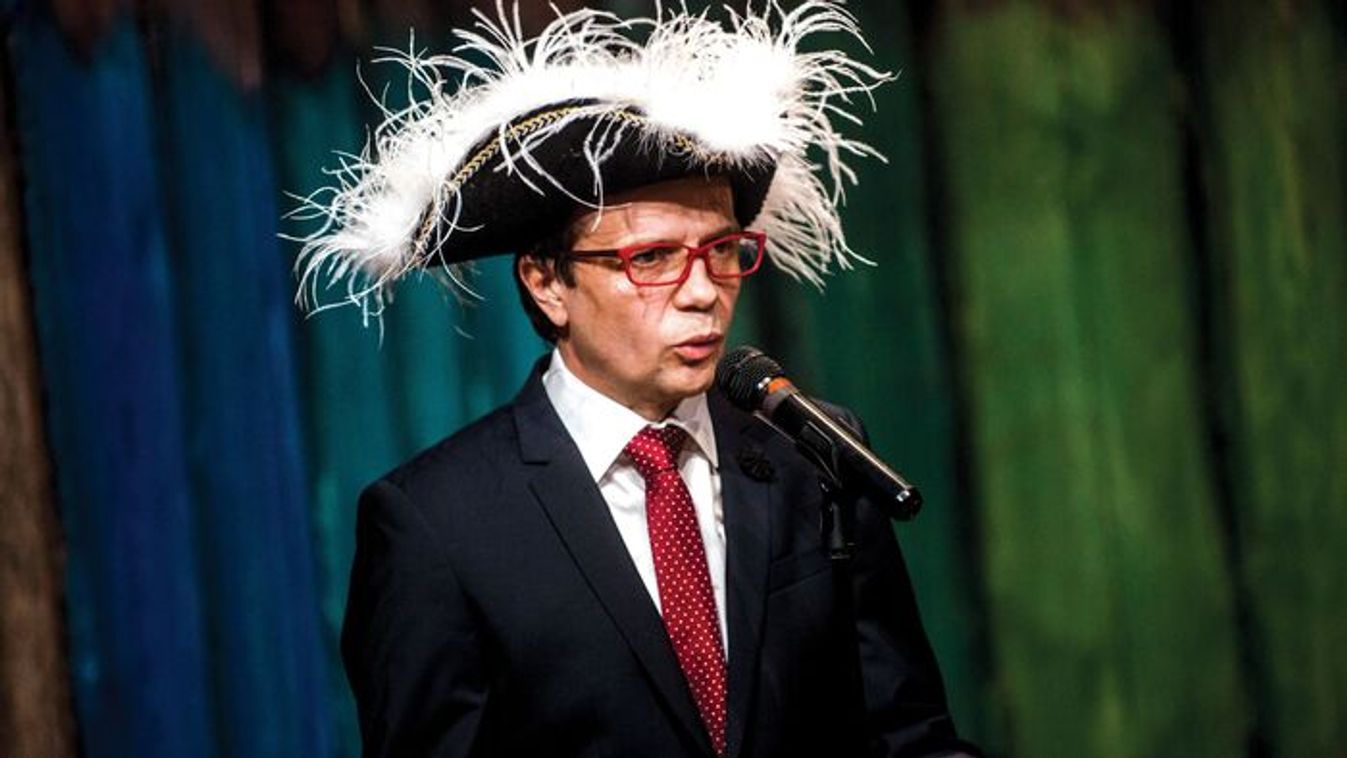
Pintér Béla rálépett a Majka és Krúbi által kitaposott, nem túl becses útra.